Your What is the name of a roman shield images are ready. What is the name of a roman shield are a topic that is being searched for and liked by netizens now. You can Download the What is the name of a roman shield files here. Get all free photos and vectors.
If you’re searching for what is the name of a roman shield images information connected with to the what is the name of a roman shield keyword, you have pay a visit to the right site. Our website always gives you hints for viewing the highest quality video and image content, please kindly surf and find more enlightening video content and graphics that match your interests.
What Is The Name Of A Roman Shield. It has been decorated with punched and incised designs that are enhanced by the application of a tinned surface to the background. There were many kinds of Roman shields used by legionaries soldiers. While reloading their weapons archers and crossbowmen would crouch behind them to shelter against incoming missile attacks. One legionary centre carries one of the traditional curved rectangular shields.
 Scutum Roman Battle Shield Outfit4events From outfit4events.com
What was the Roman shield formation called. This shield is called a scutum. One legionary centre carries one of the traditional curved rectangular shields. How the Romans beat the phalanx. The Romans began to apply the formation with maniples and left the hoplite phalanx of the Greeks. The effect would have been of golden.
If you were a soldier in the Roman army your shield would be very important to you.
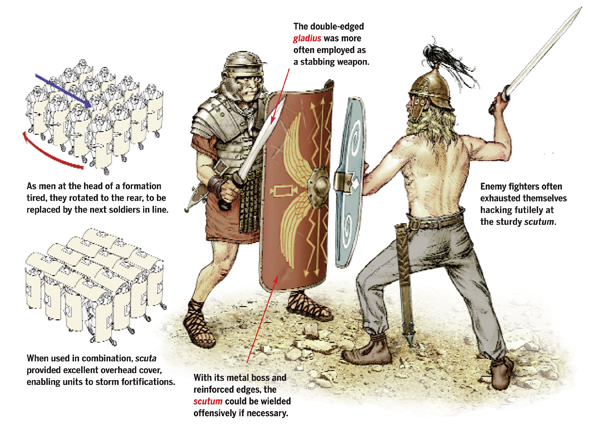
The Roman Army was divided into two different elements. The Roman Soldiers Shield. They were difficult to pull out and will bend on impact so they couldnt be thrown back at the attacking Roman soldiers. The men in the back ranks would place their shields over their heads to protect the formation from above balancing the shields on their helmets overlapping them. The armor of the Roman army around 160 BC was mainly comprised of a shield the scutum and body armor that varied depending on rank and position consisting of a breastplate and one greave on the left leg. The Pavise was a large square and convex shield used during the late 14th to early 16th centuries by archers crossbowmen and infantry soldiers.
 Source: romanobritain.org
In Ancient Roman warfare the testudo or tortoise formation was a type of shield wall formation commonly used by the Roman Legions during battles particularly sieges. The latter one made the Romans took clipeus. If necessary the legionaries on the sides and rear of the formation could stand sideways or backwards with shields held as the. The effect would have been of golden. Legionnaire Scutum The scuta are a well-known type of Roman shield.
 Source: hobbycraft.co.uk
What was the Roman shield formation called. Roman Legionaire Shield The Tortoise formation Roman Auxiliary shield Roman Cavarly Shields Standard Bearer Shield. There were many kinds of Roman shields used by legionaries soldiers. The Roman Army was divided into two different elements. The shields would be held in such a way that they presented a shield wall to all sides.
 Source: istockphoto.com
It was a round shield. The armor of the Roman army around 160 BC was mainly comprised of a shield the scutum and body armor that varied depending on rank and position consisting of a breastplate and one greave on the left leg. The larger shield was needed for the former formation. The latter one made the Romans took clipeus. The effect would have been of golden.
 Source: timetrips.co.uk
It was usually large enough to cover the entire body. The shield was called scutum. The Roman Soldiers Shield. This shield is called a scutum. The Roman Army was divided into two different elements.
 Source: pinterest.com
Shields prevented them from being hit by arrows or sword thrusts and in siege situations from overhead missilesThe Roman army used shields because they were a protective piece of their equipment. Let us find out other impressive facts about Roman Shields below. It was a round shield. The Roman Soldiers Shield. The Auxiliaries and the Legionaries.
 Source: seekpng.com
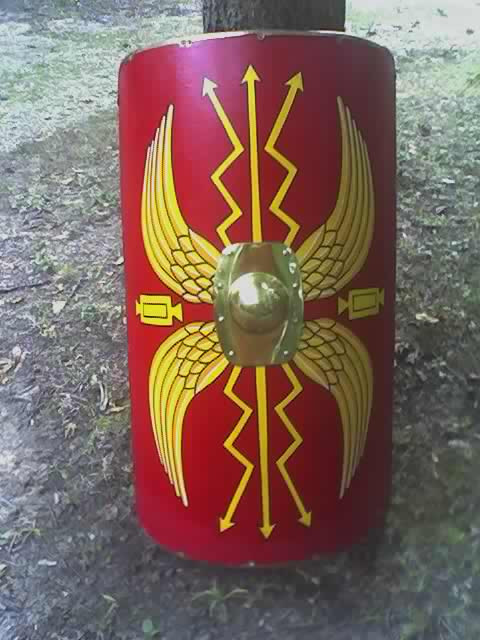
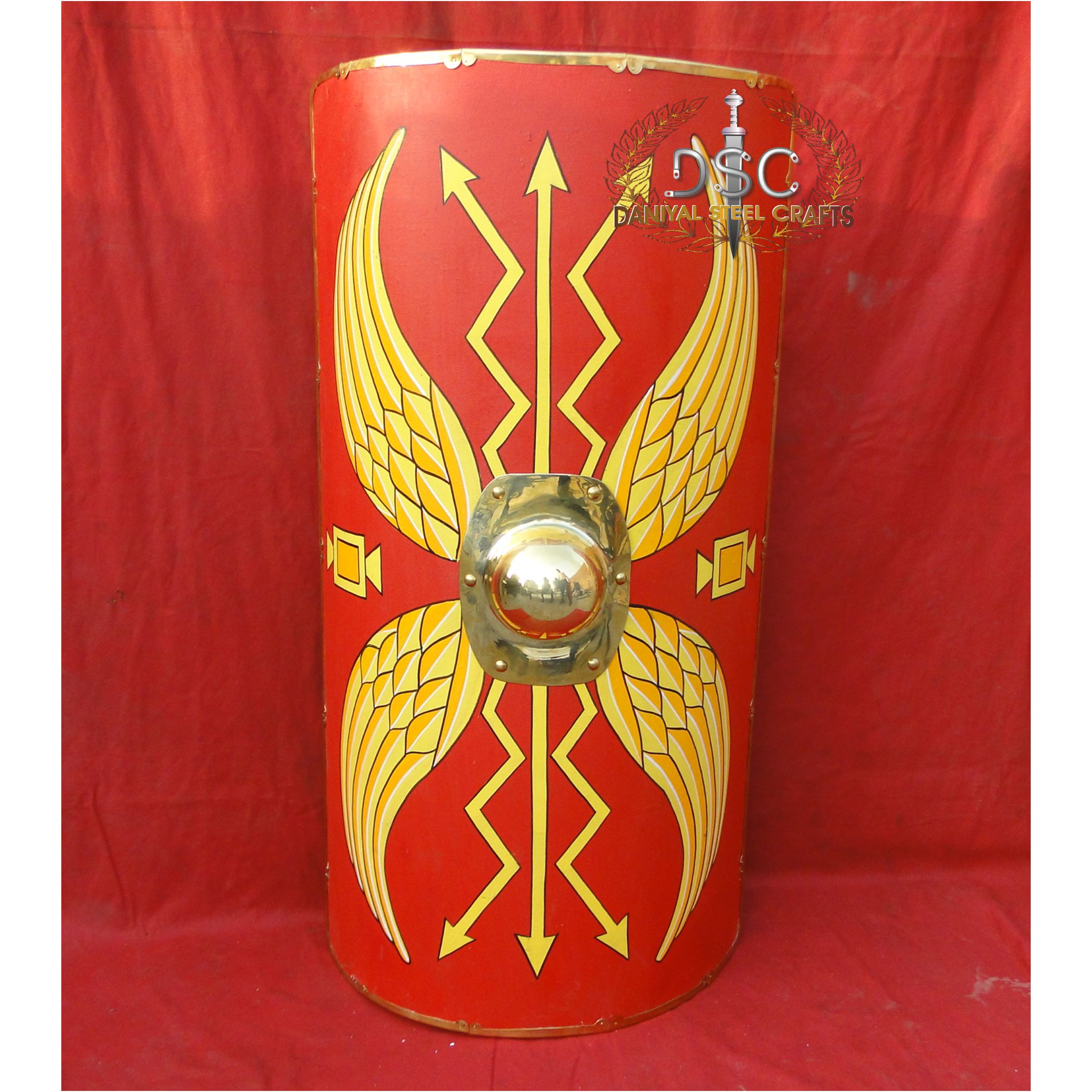
The scutumwas a curved oval shield. Legionnaire Scutum The scuta are a well-known type of Roman shield. Earlier on they were oval and flat but at the time of the invasion of Britain AD43 most were rectangular and curved like part of a cylinder. This shield is called a scutum. The men in the back ranks would place their shields over their heads to protect the formation from above balancing the shields on their helmets overlapping them.
 Source: imperium-romana.org
These large shields were usually either rectangular or oval in shape as well as having a concave curve to them that provided foot soldiers with excellent protection. It has been decorated with punched and incised designs that are enhanced by the application of a tinned surface to the background. The effect would have been of golden. How the Romans beat the phalanx. What was the Roman shield formation called.
 Source: show.me.uk
Earlier on they were oval and flat but at the time of the invasion of Britain AD43 most were rectangular and curved like part of a cylinder. There were many kinds of Roman shields used by legionaries soldiers. Earlier on they were oval and flat but at the time of the invasion of Britain AD43 most were rectangular and curved like part of a cylinder. The Romans began to apply the formation with maniples and left the hoplite phalanx of the Greeks. If necessary the legionaries on the sides and rear of the formation could stand sideways or backwards with shields held as the.
 Source: primaryhomeworkhelp.co.uk
Roman shields were called Scutum by the Romans. THE OVAL SHIELD A number of well preserved Roman shields were discovered at the site of Dura Europus in modern-day Syria dated to the mid-3rd century and these have provided us with fascinating details about Roman shield construction. There were many kinds of Roman shields used by legionaries soldiers. The Scutum On the left side of the soldiers body was his trusty shield scutum This was unusual in design since it was not flat as was the case with shields used by Celtic tribes but semi-circular. They were difficult to pull out and will bend on impact so they couldnt be thrown back at the attacking Roman soldiers.
 Source: myarmoury.com
Shields prevented them from being hit by arrows or sword thrusts and in siege situations from overhead missilesThe Roman army used shields because they were a protective piece of their equipment. Time Trips KS2 History and Science Workshops. Shield boss of Junius Dubitatus Roman Britain early 2nd century AD Found near the mouth of the River Tyne in 1867 This is the bronze centre panel from a wooden legionary shield of curved rectangular shape. While reloading their weapons archers and crossbowmen would crouch behind them to shelter against incoming missile attacks. This shield is called a scutum.
Source: outfit4events.com
If you take a look at the Wikipedia page for Scutum one of the images is of a shield found during an excavation in a. Roman shields were called Scutum by the Romans. It was a semi-circular shield designed so that any missiles thrown at the soldier would be deflected to one side. Shields prevented them from being hit by arrows or sword thrusts and in siege situations from overhead missilesThe Roman army used shields because they were a protective piece of their equipment. The shield was called scutum.
 Source: youtube.com
There were many kinds of Roman shields used by legionaries soldiers. These large shields were usually either rectangular or oval in shape as well as having a concave curve to them that provided foot soldiers with excellent protection. Roman Legionaire Shield The Tortoise formation Roman Auxiliary shield Roman Cavarly Shields Standard Bearer Shield. It was usually large enough to cover the entire body. If you take a look at the Wikipedia page for Scutum one of the images is of a shield found during an excavation in a.
 Source: daniyalsteelcrafts.com
When you were fighting enemies armed with swords and spears your shield offered much needed protection. The Roman Soldiers Shield. Shields prevented them from being hit by arrows or sword thrusts and in siege situations from overhead missilesThe Roman army used shields because they were a protective piece of their equipment. It was usually large enough to cover the entire body. If you take a look at the Wikipedia page for Scutum one of the images is of a shield found during an excavation in a.
 Source: imperium-romana.org
The Roman Army was divided into two different elements. Roman Legionaire Shield The Tortoise formation Roman Auxiliary shield Roman Cavarly Shields Standard Bearer Shield. Shield boss of Junius Dubitatus Roman Britain early 2nd century AD Found near the mouth of the River Tyne in 1867 This is the bronze centre panel from a wooden legionary shield of curved rectangular shape. The larger shield was needed for the former formation. If necessary the legionaries on the sides and rear of the formation could stand sideways or backwards with shields held as the.
 Source: quora.com
THE OVAL SHIELD A number of well preserved Roman shields were discovered at the site of Dura Europus in modern-day Syria dated to the mid-3rd century and these have provided us with fascinating details about Roman shield construction. While reloading their weapons archers and crossbowmen would crouch behind them to shelter against incoming missile attacks. One legionary centre carries one of the traditional curved rectangular shields. Legionnaire Scutum The scuta are a well-known type of Roman shield. The shield was called scutum.
 Source: avalonsibyl.com
The armor of the Roman army around 160 BC was mainly comprised of a shield the scutum and body armor that varied depending on rank and position consisting of a breastplate and one greave on the left leg. Shields prevented them from being hit by arrows or sword thrusts and in siege situations from overhead missilesThe Roman army used shields because they were a protective piece of their equipment. It was a semi-circular shield designed so that any missiles thrown at the soldier would be deflected to one side. Shield boss of Junius Dubitatus Roman Britain early 2nd century AD Found near the mouth of the River Tyne in 1867 This is the bronze centre panel from a wooden legionary shield of curved rectangular shape. If you were a soldier in the Roman army your shield would be very important to you.
 Source: imperium-romana.org
It was usually large enough to cover the entire body. They were difficult to pull out and will bend on impact so they couldnt be thrown back at the attacking Roman soldiers. Earlier on they were oval and flat but at the time of the invasion of Britain AD43 most were rectangular and curved like part of a cylinder. Earlier on they were oval and flat but at the time of the invasion of Britain AD43 most were rectangular and curved like part of a cylinder. Shield boss of Junius Dubitatus Roman Britain early 2nd century AD Found near the mouth of the River Tyne in 1867 This is the bronze centre panel from a wooden legionary shield of curved rectangular shape.
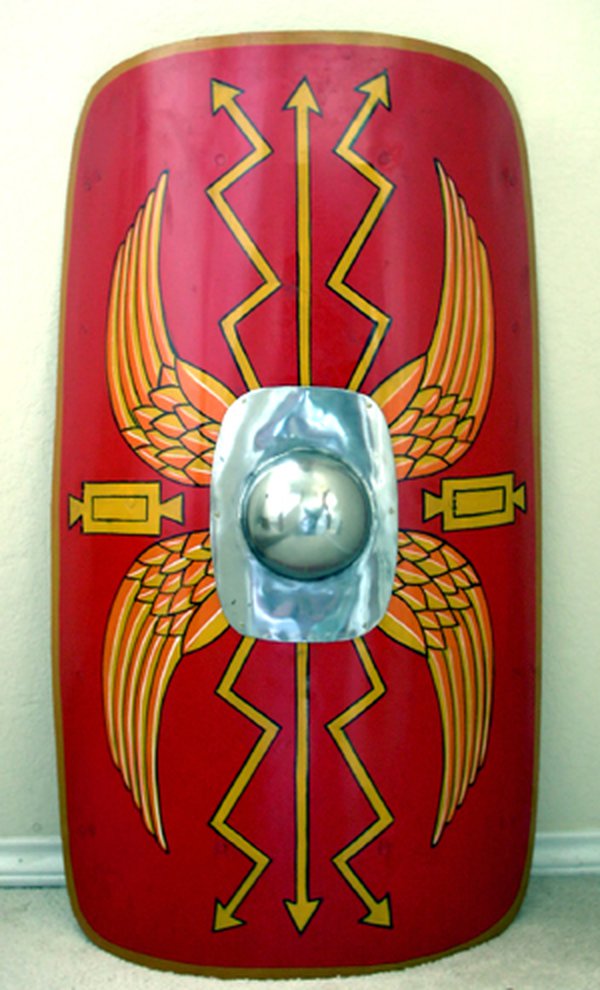 Source: segedunumromanfort.org.uk
The Romans began to apply the formation with maniples and left the hoplite phalanx of the Greeks. The Auxiliaries and the Legionaries. THE OVAL SHIELD A number of well preserved Roman shields were discovered at the site of Dura Europus in modern-day Syria dated to the mid-3rd century and these have provided us with fascinating details about Roman shield construction. The Roman curved rectangle shield design called a Scutum was used from the early sovereignty of Italy under Roman control right up until the fall of the empire in the Dark. The Romans began to apply the formation with maniples and left the hoplite phalanx of the Greeks.
This site is an open community for users to do sharing their favorite wallpapers on the internet, all images or pictures in this website are for personal wallpaper use only, it is stricly prohibited to use this wallpaper for commercial purposes, if you are the author and find this image is shared without your permission, please kindly raise a DMCA report to Us.
If you find this site value, please support us by sharing this posts to your preference social media accounts like Facebook, Instagram and so on or you can also save this blog page with the title what is the name of a roman shield by using Ctrl + D for devices a laptop with a Windows operating system or Command + D for laptops with an Apple operating system. If you use a smartphone, you can also use the drawer menu of the browser you are using. Whether it’s a Windows, Mac, iOS or Android operating system, you will still be able to bookmark this website.